
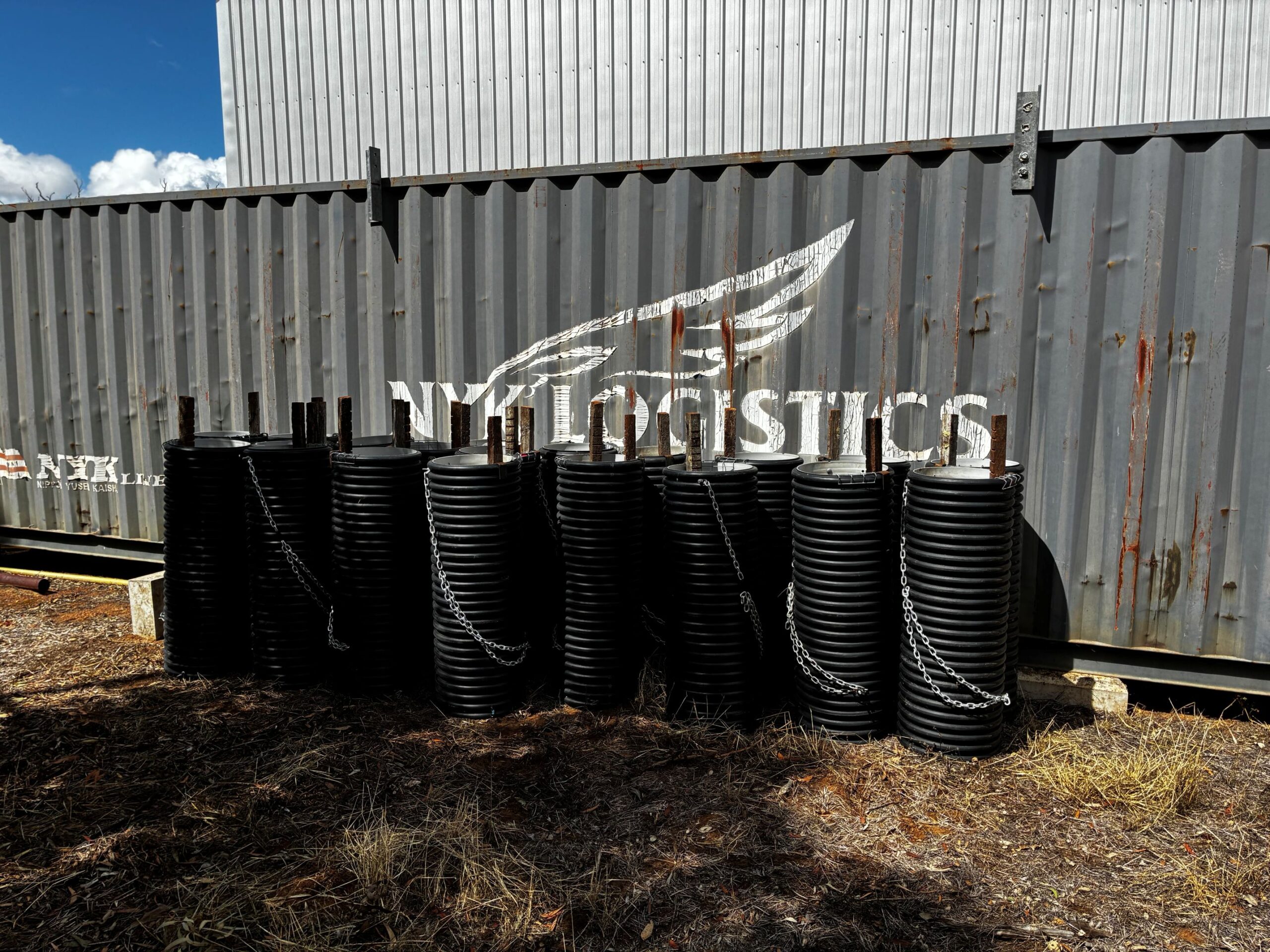
LandcareSJ has donated 20 of its latest-design Cockatubes® to a long-running Carnaby’s black cockatoo research site, where researcher and black cockatoo expert Rick Dawson will use them to replace older artificial nesting hollows.
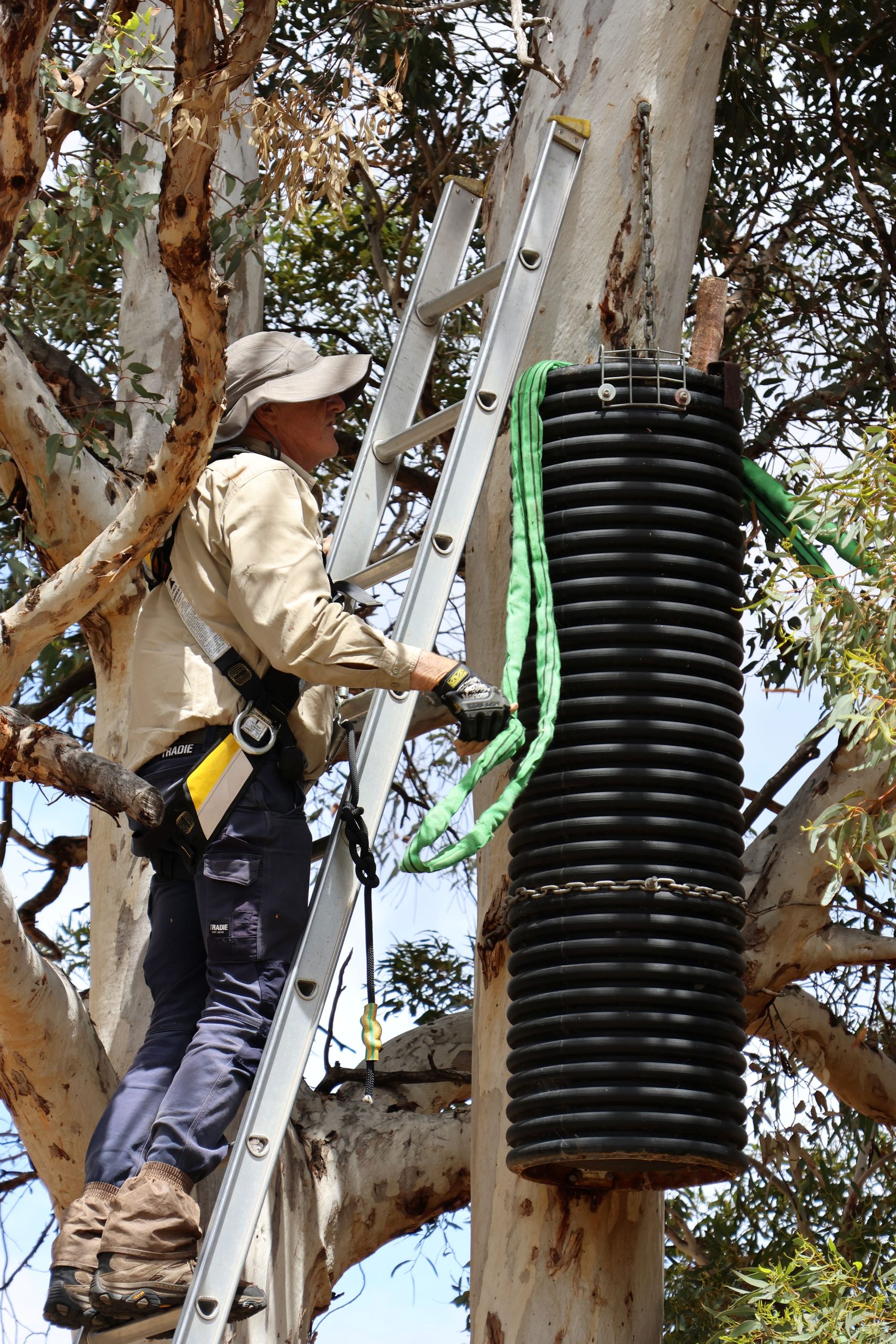
Coomalloo, north of Badgingarra, has been run as a black cockatoo research site by owners Rick Dawson and Denis Saunders for 57 years. It hosts more than 80 older-model Cockatubes® and a thriving population of Carnaby’s black cockatoos – one of WA’s three black cockatoo species, endangered due to habitat and food source destruction.
The new Cockatube® design has a hinged trapdoor in the base, so mulch – vital for insulation and to cushion eggs – can be replaced without removing the tube from the tree, saving time and money for those maintaining the hollows.
Senior Environmental Officer at LandcareSJ, Dr Drew Batty, said it was great to see the nature-positive results of years of sound scientific research.
“The new Cockatubes are the product of decades of research and many data points – a lot of trial-and-error builds, a lot of monitoring and observing these Cockatubes in different locations,” he said.
Nearly 60 years of research inform the current design, which has changed significantly over the decades.
LandcareSJ Board member, Alan Elliot, said the new design was of much better technical quality, and more successful as nesting sites, than early models.
“The knowledge we have gained from experience, and the research of Rick and his team, has been invaluable. The first designs were narrow and made from heavy pipe – a Cockatube back then could be upwards of 60 kilos. Over time, we’ve learned the tubes need to be around 400 milimetres in diameter and 1.2 metres deep. We also swapped to building them out of ribbed pipe, made of recycled high-density polyurethane, so the weight has dropped to about 15 kilos.”
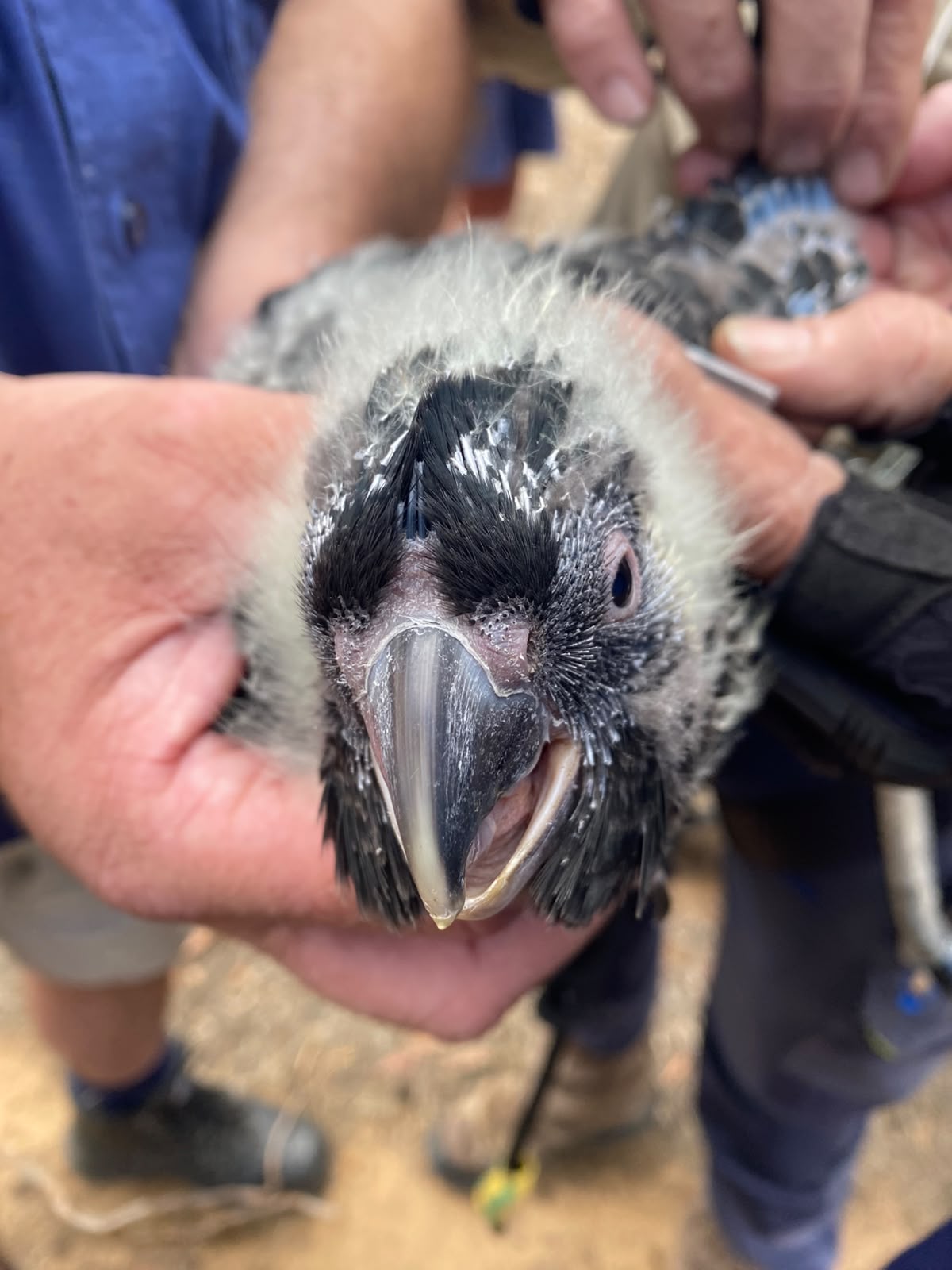
While visiting Coomalloo, LandcareSJ Board and staff members helped gather data and tag cockatoo chicks. They checked 12 tubes and found that half held chicks – a ratio that proves the Cockatubes® are being used successfully as breeding sites.
Dr Batty said seeing large flocks of Carnaby’s feeding at Coomalloo was a highlight of the trip.
“It’s clear that without artificial nesting hollows like the Cockatube®, and without the repairs Rick’s team do to natural hollows to keep them going as viable nesting options, the local population of Carnaby’s would be in decline. Instead, we see a thriving population.”

Ten of the Cockatubes® donated to Coomalloo were built by Section 95 volunteers from Karnet Prison Farm. Steel mesh, which acts as a ladder for the birds, is donated by Midalia Steel.
The production of Cockatubes® is funded by LandcareSJ’s Public Fund, which comprises mostly donations from the public. A significant portion of its funds goes towards black cockatoo projects across the southwest of WA. The group donates Cockatubes® frequently, and more than 3,000 have been installed over the years. More than 150 have been directly sponsored by individuals and businesses.
A special thank you to Michelle and Nick Clayton, and Bec Phoenix, who donated towards the build and installation of these Cockatubes®.